ICFAW attends the 18th WOAH Regional Conference for the Middle East - Cyprus

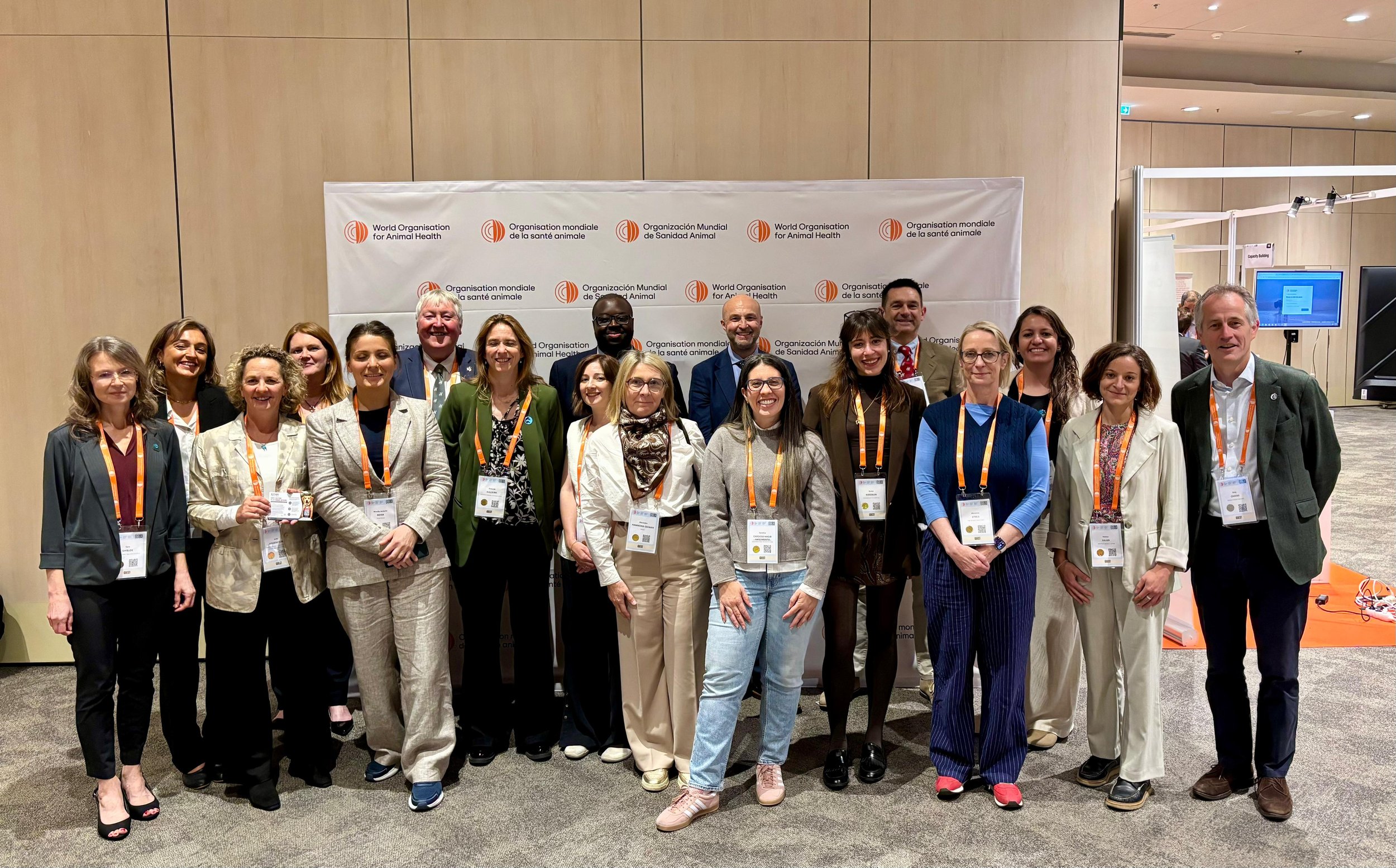
The International Coalition for Animal Welfare is invited as speaker at the 18th Conference of the Regional Commission for the Middle East of the World Organisation for Animal Health (WOAH) in Larnaca, Cyprus from November 24 to 28, 2025. We are pleased about the opportunity to present ICFAW’s work on different animal welfare topics in the region and thank WOAH for putting animal welfare for the first time on the agenda of this important biennial Middle East conference. This is a significant achievement and reflects the positive trend in the region where interest in animal welfare topics is slowly but surely growing. ICFAW is ready to continue contributing to these positive changes, offering our support and cooperation to the Members in various areas of animal welfare.

 For the poster session of the conference, we took up the topic of this year's ICFAW side event to the 92nd General Session of WOAH concerning antimicrobial resistance (AMR) which represents a global threat to human, animal and environmental health. In our poster, we shed light on the critical yet overlooked linkage between animal transport and AMR transmission (Click here to see the poster). During transport, animals face stress that worsens with poor conditions and longer journeys, causing suffering, injuries, illness, and even death. Poor transport conditions are an ethical issue with economic implications and an increased risk of disease spreading and AMR transmission. It is essential to improve the conditions under which animals are transported, to minimize the stress before and during transport and to reduce the journey times for the animals – for the benefit of the animals and humans.

ICFAW Secretariat
ICFAW side event at WOAH 99th General Session: Improving Animal Welfare for Stronger Aquaculture

Context: The WOAH aquatic code has a chapter on welfare during transport and welfare during slaughter. Both remain largely up to date in terms of being correct in their content, however both are limited to general principles and higher level guidance. They do not contain specific parameters for different species animals, for oxygen levels during transport or electrical stunning parameters for example. They could be expanded to reflect the much larger knowledge base we now have on species-specific parameters as well as available technology. The WOAH aquatic strategy to 2025 has an action point to review the welfare chapters for how up to date their science is. We would like to see an action to update these chapters in a future aquatic strategy. The aquatic strategy to 2025 set the objective to create a new chapter in the aquatic code addressing biosecurity. We are very keen to promote stress reduction, supporting natural immune function, and good environmental conditions as the basis, or at least an important part, of biosecurity in this ongoing standards development.

ICFAW Secretariat
ICFAW side event at WOAH General Session

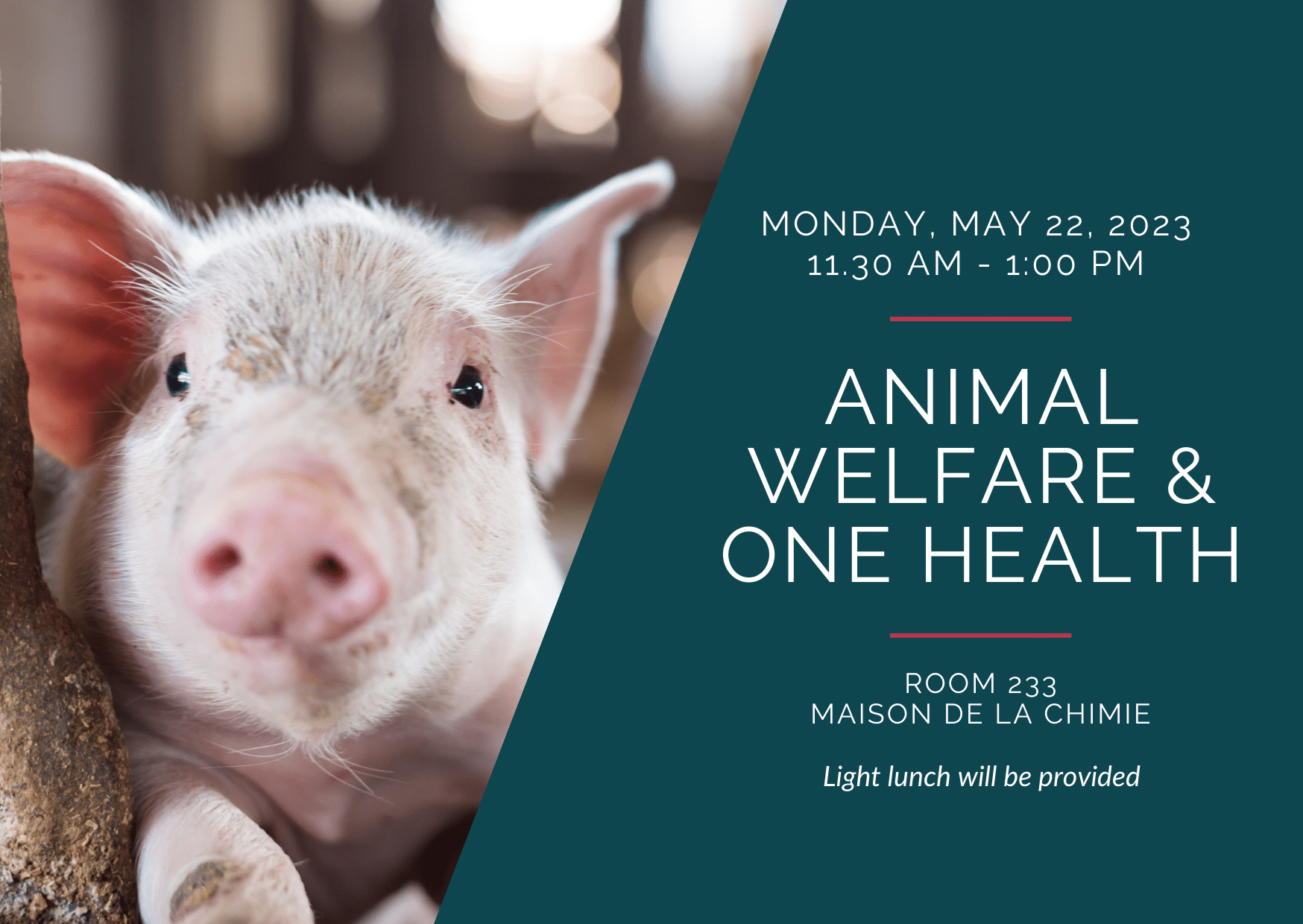
Improving the welfare of animals is an investment for future global health. In this event, we raise awareness about the UN Environment Assembly's call for a report on the nexus between animal welfare, the environment, and sustainable development. We also explore animal welfare as an effective means to prevent health crises, such as antimicrobial resistance and zoonotic outbreaks. Join us!

ICFAW side event at 99th WOAH General Session on Animal Welfare & One Health - Monday 22 May 2023 - 11:30-13:00

The recognition that there is a link between animal health and animal welfare is what has prompted WOAH to expand its mandate and start working on animal welfare. Similarly, the acknowledgement that animal welfare can contribute to addressing environmental challenges, promoting the One Health approach and achieving the Sustainable Development Goals, has triggered a call from the United Nations Environment Programme (UNEP) to work in collaboration with the WOAH,  the Food and Agriculture Organization of the United Nations (FAO), the World Health Organization (WHO) and the One Health High-Level Expert Panel on matters related to animal welfare and its nexus with human health and the environment, through a One Health approach (see  Resolution (UNEP/EA.5/Res.1,).

This event aims to provide theoretical and empirical insights on the integration of animal welfare measures within One Health policies. The goal is to provide enough context and examples to make participants leave the event confident that adopting animal welfare measures is an investment in preventing health crises (such as AMR, zoonoses) rather than an additional cost to often limited public budgets.

Agenda

  • Opening: Roly Owers, Chair of ICFAW

  • Setting the scene: unveiling the Nexus & moderator: James Yeates, CEO of the World Federation for Animals

  • Animal Welfare and the Sustainable development goals: Leopoldo Stuardo, Scientific Coordinator, Animal welfare, WOAH Standards Department 

  • One Health Case studies in Africa: Manuelle Miller, Veterinary Without Borders

  • One Health perception in Americas : Edilberto Britto, WOAH Delegate from Colombia

  • Debate led by Moderator, James Yeates (CEO of WFA)

Outcome of the event on Pig welfare in the Americas: Implementing Global Guidelines into Regional Practice.

On September 28 and 29, 2022, the International Coalition for Animal Welfare (ICFAW), Regional Working Group for the Americas, co-hosted an event titled Pig welfare in the Americas: Implementing Global Guidelines into Regional Practice. ICFAW’s partner in the event was the World Organization for Animal Health Collaborating Center for Animal Welfare for Chile, Uruguay and Mexico and the event was held in Chile. 

The WOAH chapter 7.13 “Animal Welfare and Pig Production” served as a framework for the program and ten international speakers (six in-person and four online) covered the full array of chapter topics including the natural behavior of pigs, the prevention of abnormal behavior, environmental enrichment, group housing for gestation, pen farrowing systems, avoiding or refining painful procedures such as castration and tail docking, space requirements, weaning of piglets and biosecurity and animal health. In addition to the program of speakers, the event included small group work in afternoon roundtables. The event was held at O’Higgins University in San Fernando, Chile. A total of 247 people attended (mostly online, with seventy people in person). The spirit of the conference was solutions and the discussion focused on collaborating to overcome pig welfare challenges, together.

To bring the information to a wider, more diverse audience, the event was held and broadcast in three languages. The landing page with pre- and post-event contents, program, scientific background, speakers CV, registration form, in-person application form, and event videos were designed to include English, Spanish and Portuguese. The small group roundtables were also held in three languages. 

The event was truly a collaborative effort. The World Organization for Animal Health Collaborating Center for Animal Welfare for Chile, Uruguay and Mexico and the O`Higgins`s University of Chile helped to convene both global experts and local pig producers. O`Higgins`s University of Chile is a public institution located in a region where many pig producers are based, providing an opportunity for their participation. The university provided the venue and technical support for the online streaming. They also helped convene the academic community involved in pig welfare research, submitted surveys and workshop questions for ethical approval, and validated the academic hours for participation certificates.

Event sponsors included Chile Carnes (the Chilean Producers Association), the Livestock and Agriculture Service (SAG), the Agriculture Policy and Statistics Office (ODEPA), the Chilean Veterinary Board and the Ministry of Agriculture. These groups supported and strengthened the event by using their own channels and contacts to promote it. 

To keep the momentum going following the conference, information from the roundtable discussions was synthesized for publication. The ideas and solutions presented were analyzed along with a pre- and post-conference survey to measure impact. A scientific paper is planned to document the results and keep the conversation ongoing with governments, producers and academics to improve the welfare of pigs.  

The program and recordings from the event can be accessed on the website here: Home - Seminario Hibrido de Implementación de Directrices en la Práctica Regional (pigwelfareamericas.com)

ICFAW Secretariat
International Conference: Pig welfare in the Americas: Implementing global guidelines into regional practice

Join us on 28 and 29 September 2022 for an international conference on Pig welfare in the Americas: Implementing global guidelines into regional practice. This is an hybrid event (online and in person at O'Higgins University, Colchagua Campus, VI Region, Chile).

This event is organized by the Regional Working Group for the Americas of the International Coalition for Animal Welfare (ICFAW), WOAH Collaborating Centre for Animal Welfare and Sustainable Livestock Systems of Uruguay, Chile, and Mexico, and the University of O’Higgins, Chile.

Full program, list of speakers and the registration link can be found here.

ICFAW Secretariat