Southeast Asian countries turn pig welfare standards into action through new public–private partnerships 5 November 2026 | Hanoi, Viet Nam
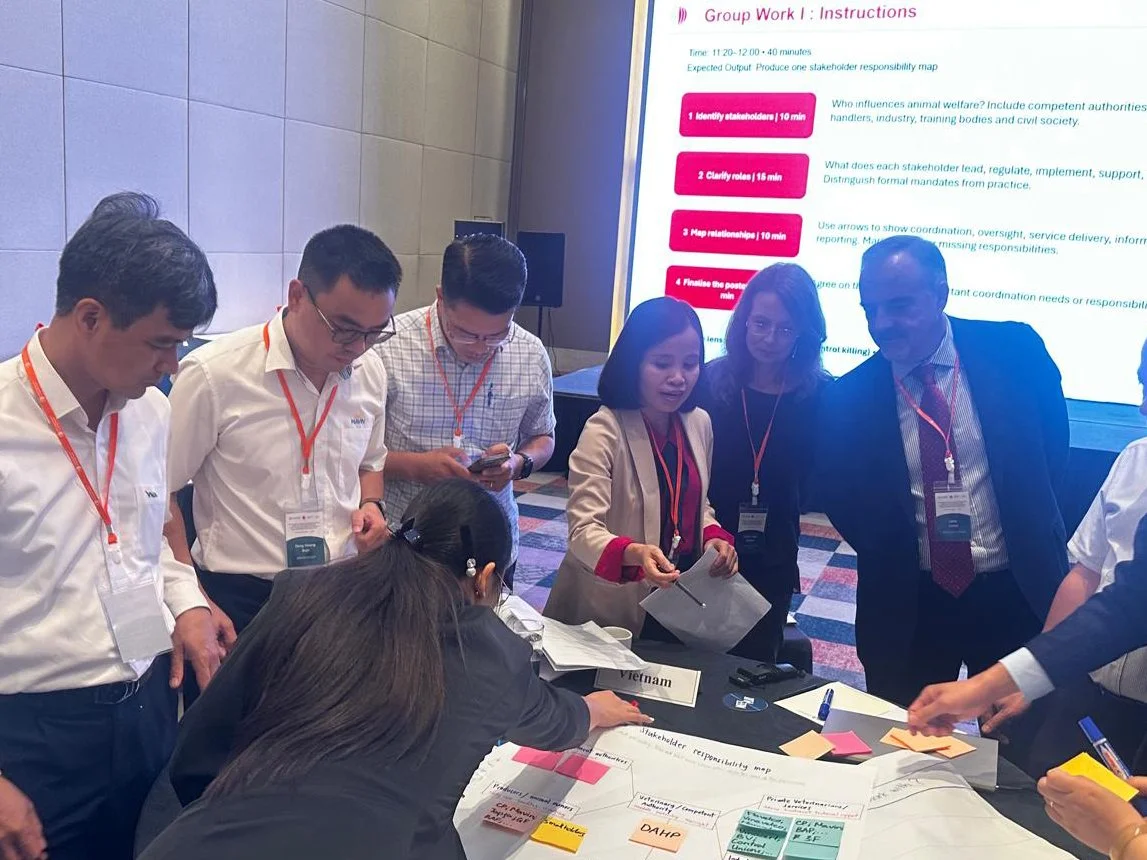
From 3 to 5 November 2026, the International Coalition for Animal Welfare (ICFAW) and the World Organisation for Animal Health (WOAH) held a Sub-regional Workshop on Operationalising Animal Welfare through Inclusive Public–Private Partnerships (PPP) and Enabling Legal Frameworks in Southeast Asia in Hanoi, Viet Nam. The workshop was the final event of the WOAH–ICFAW joint project supporting the implementation of WOAH Terrestrial Code Chapter 7.6 on Killing Animals for Disease Control and Chapter 7.13 on Animal Welfare and Pig Production Systems. It was also the first ever WOAH Public-Private Partnership event on animal welfare.
About 40 participants took part, including government veterinary service officials from the four project countries (Cambodia, Lao PDR, Thailand and Viet Nam), and several private-sector representatives (large pig producers, investors and a pharmaceutical company), and colleagues from WOAH, NGOs, academia and industry associations. The workshop aimed to support the operationalisation of animal welfare standards through inclusive partnerships, assess existing legislative and institutional arrangements, develop accountable partnership models with clear roles and investment mechanisms, and create country-specific roadmaps aligned with WOAH animal welfare standards.
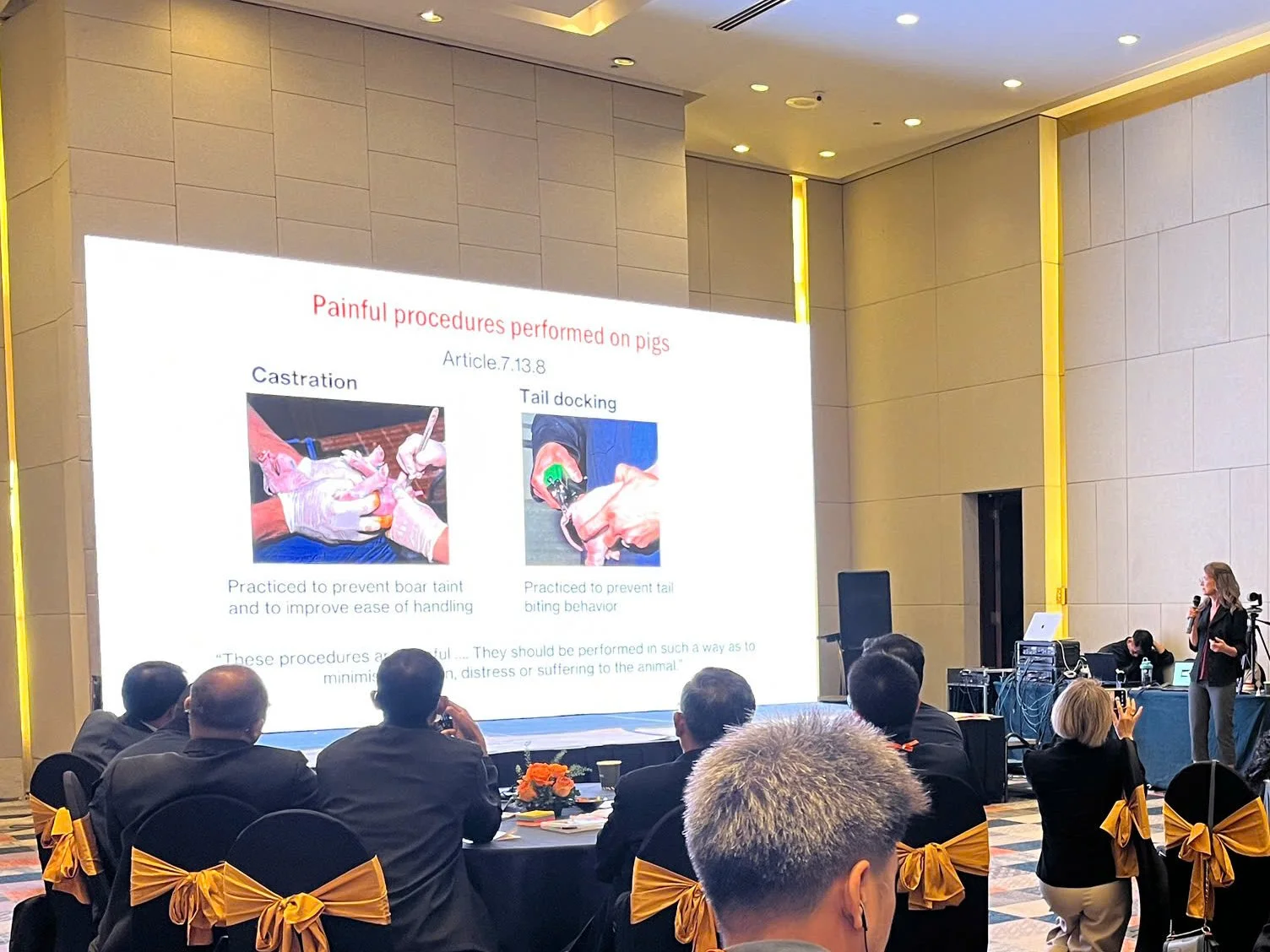
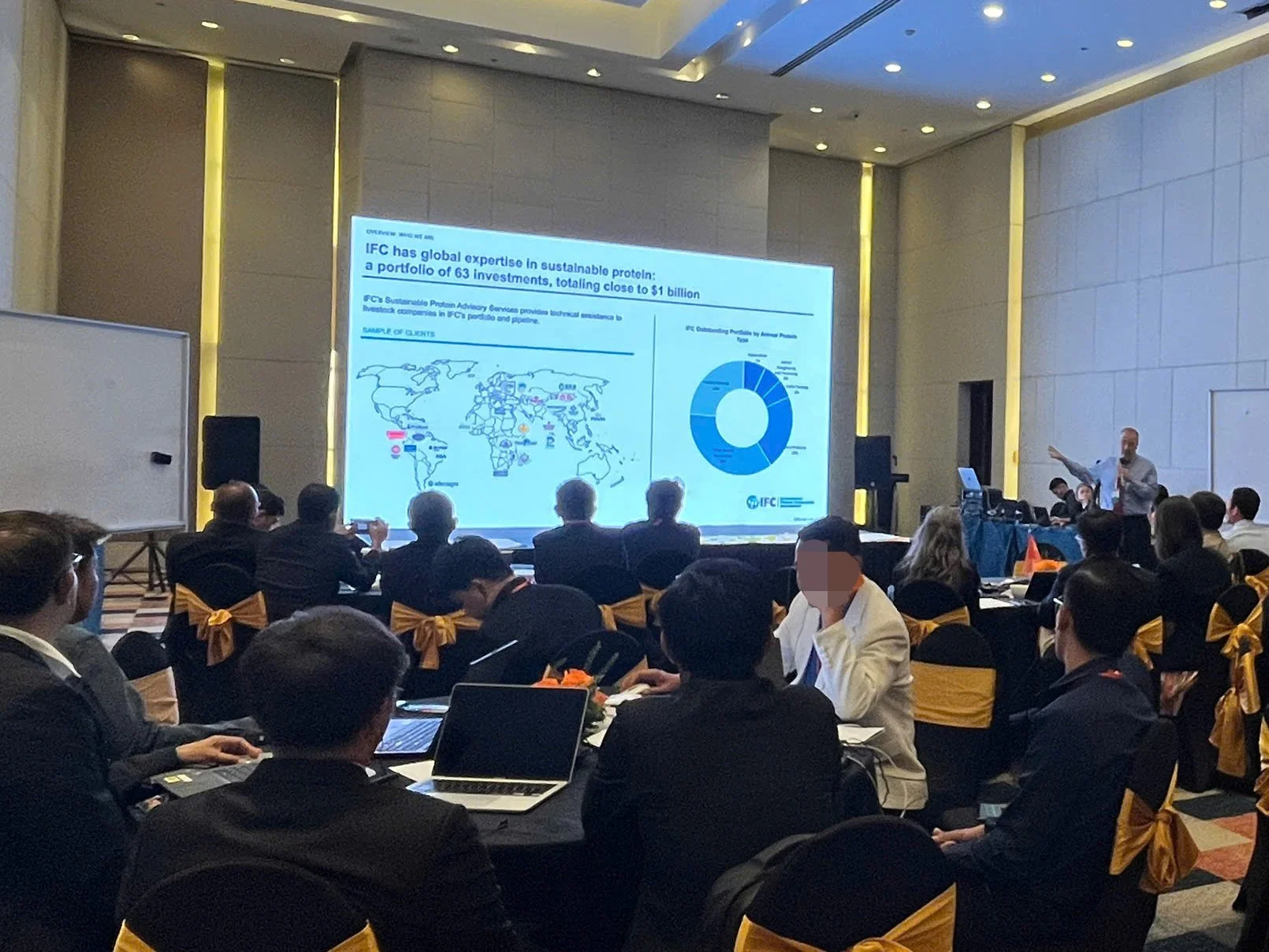
On the first day of the November program, the Viet Nam Department of Animal Health and Production, WOAH and ICFAW opened the workshop, and the four countries shared their progress since the two previous Training-of-Trainers sessions held in 2025 and the regional conference held in early 2026. On the second day, WOAH presented its animal welfare chapters and the Regional Animal Welfare Strategy for Asia and the Pacific. Dr Sara Shields, ICFAW past chair, outlined ways that ICFAW can support pig welfare activities under Chapters 7.6 and 7.13, and the International Finance Corporation (IFC) presented its sustainability policy and position on animal welfare. By the third day, each country team had developed a roadmap for their project.
The workshop brought public and private sectors together to form four PPP projects, one in each country, each with clear timelines and action plans:
· Cambodia: capacity building and awareness in pig production, including training, on-farm coaching and learning materials aligned with Chapters 7.6 and 7.13.
· Lao PDR: a biosecurity and welfare partnership, starting with a PPP committee and certified training at model farms.
· Thailand: enhancing best practice in managing painful procedures in piglets, supporting small- and medium-scale producers.
· Viet Nam: developing and applying a pig welfare technical guideline
Public-Private Partnership Projects: Roadmap and action plans
· Cambodia: to set up a technical working group within three months, finalise the translation of Chapters 7.6 and 7.13 and develop learning materials within six months, and begin face-to-face training and on-farm coaching within the first year.
· Lao PDR: To establish its PPP committee and deliver its first certified biosecurity and welfare training at model farms within a year, and to bring 30% of pig farms under the programme by 2029.
· Thailand: To aim to secure approval of its project proposal and set up a working group within a year, pilot and validate its approach on farms with certification from the Department of Livestock Development by 2029, and scale nationwide by 2030.
· Viet Nam: To set up its committee and agree a memorandum of understanding in January 2027, run a pilot in 2027, and expand to up to 100 farms by 2030.